 English
 فارسی
فارسی


Your 2026 Paycheque Update: Understanding the Federal Tax Bracket Change
Introduction
See how the 2026 federal tax cut is putting up to $420 back in your pocket this year—and what it means for your next paycheque.
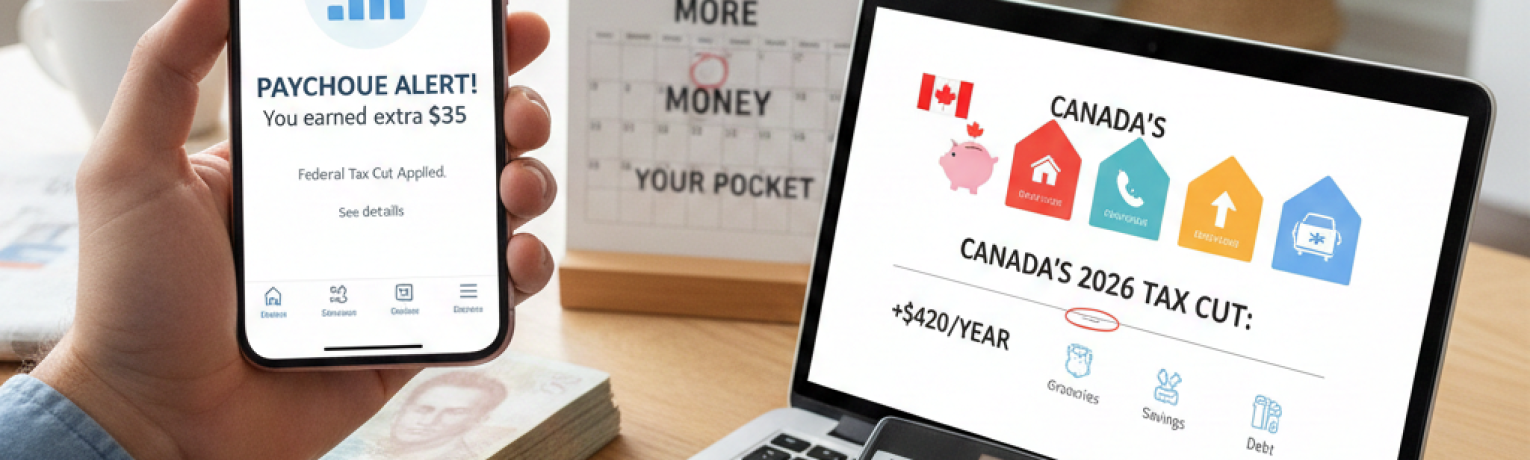
As we move into 2026, many Canadians are noticing a welcome shift in their take-home pay. While tax updates are often associated with new filing requirements or complex regulations, this latest change is a straightforward "pocketbook" win for the average taxpayer.
Starting January 1, 2026, the federal government has officially lowered the tax rate for the first income bracket. Here is a professional breakdown of what this change means for you and your household.
The Change: From 15% to 14%
Canada uses a "marginal tax bracket" system, which means your income is taxed in layers. You can think of these layers as buckets that fill up as you earn money throughout the year.
For several years, the first bucket of income (up to $58,523) was taxed at a federal rate of 15%. For 2026, this rate has been reduced to 14%.
Because every taxpayer—regardless of whether they earn $50,000 or $250,000—must "fill" that first bucket before moving to higher rates, nearly every working Canadian will see a reduction in the total federal tax they owe.
Why Does 1% Matter? Real-Life Examples!
You might be thinking, "Just 1%? What difference can that make?" Well, when it comes to your entire first chunk of income, it adds up! Let’s look at how the math works in practice:
1. The Individual Earning $30,000 Annually
· Previous Tax (15%): $30,000 x 0.15 = $4,500
· New Tax (14%): $30,000 x 0.14 = $4,200
· Your Annual Savings: $300! That is roughly $25 extra per month—enough for a nice dinner out or a few extra bags of groceries.
2. The Average Canadian Earning $60,000 Annually
· Since your income is above the $58,523 threshold, you get the maximum benefit from this particular cut. The 1% saving applies to the full $58,523.
· Your Annual Savings: Roughly $420! For a couple both earning this amount, that's over $800 back in the household budget.
3. High Earners ($150,000+ Annually)
· Even if you are in a much higher tax bracket, you still benefit! Your first $58,523 of income is now taxed at 14% instead of 15%.
· Your Annual Savings: Also around $420! This tax cut impacts everyone, regardless of their total income, by reducing the tax on their initial earnings.
These savings are typically spread across your yearly paycheques, meaning your "net pay" should be slightly higher each month compared to last year.
Protecting Your Credits: The "Top-Up" Mechanism
A common question we hear involves how tax rate changes affect non-refundable tax credits, such as the Basic Personal Amount, Tuition credits, or Medical Expense credits. Usually, these credits are calculated based on the lowest tax rate.
To ensure that a lower tax rate doesn't accidentally "shrink" the value of these credits, the government has introduced a Top-Up Tax Credit. This ensures that your credits remain just as valuable as they were before the rate cut, allowing you to keep the full benefit of the 1% reduction.
Final Thoughts
This 2026 tax cut is an "automatic" benefit; you do not need to apply for it or file additional paperwork to receive it. However, understanding why your paycheque has changed helps you better plan your personal budget and financial goals for the year ahead.
While the tax landscape can often feel overwhelming, our goal is to ensure you have the clarity needed to manage your finances with confidence.
Do you have questions about how these changes affect your specific tax filing or payroll this year? Our team is here to provide clear, professional guidance. Feel free to contact us at Adelzadeh Accounting and Taxation Professional Corporation to schedule a consultation.